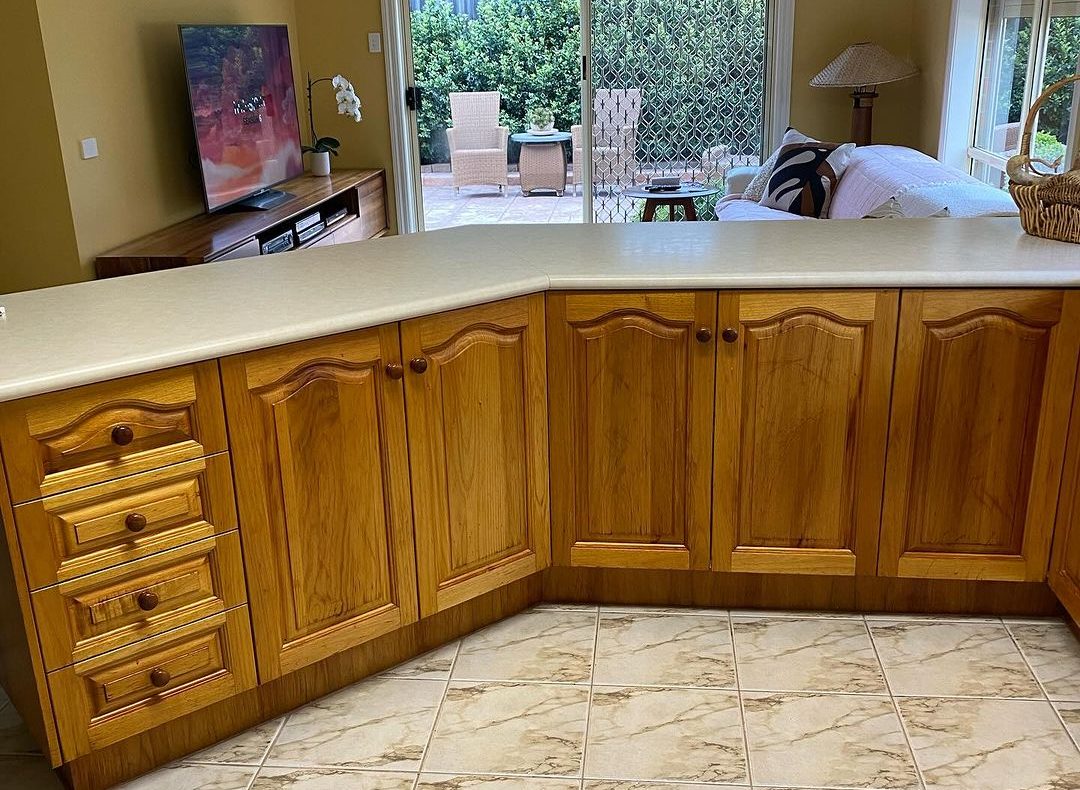
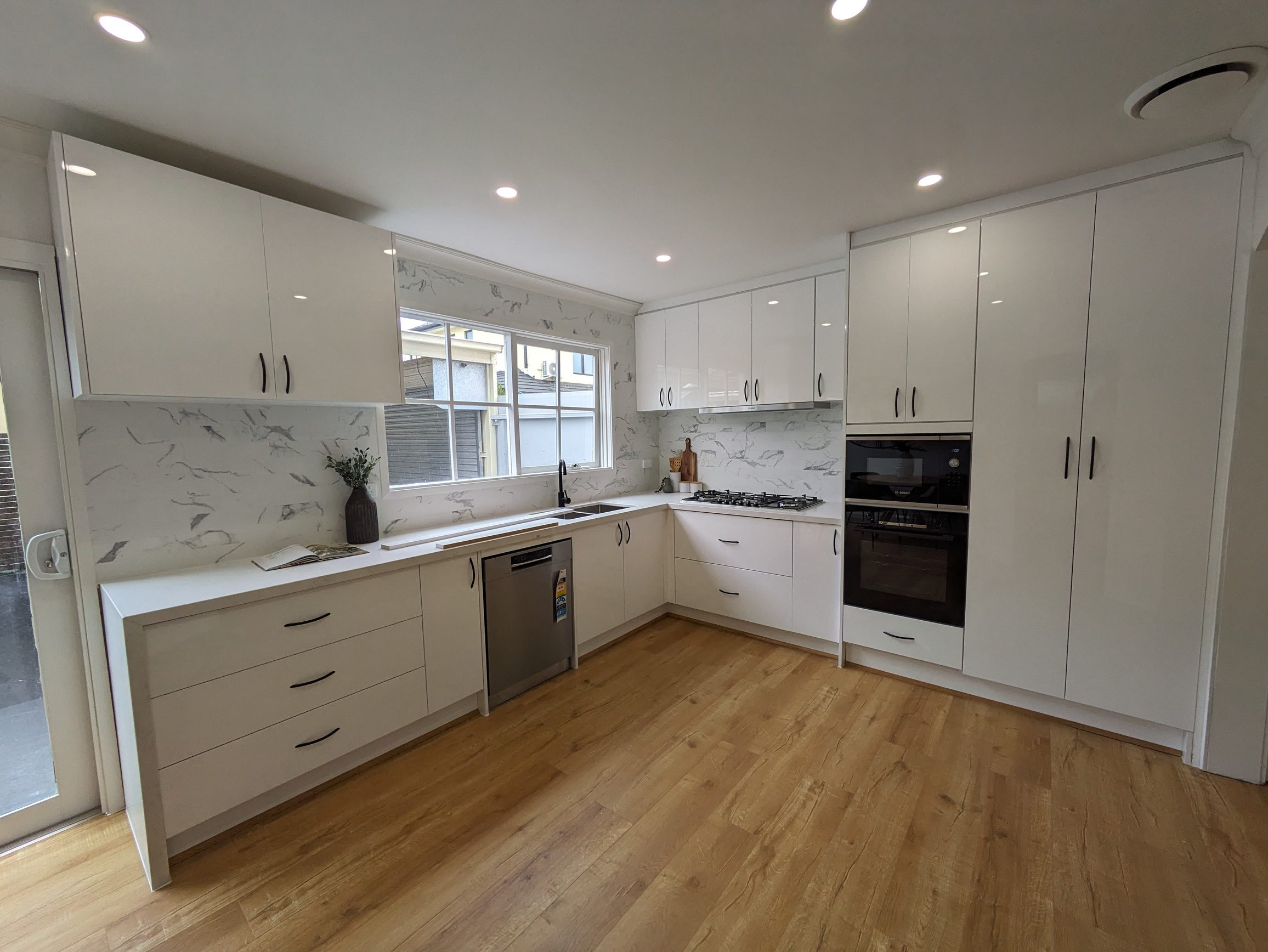
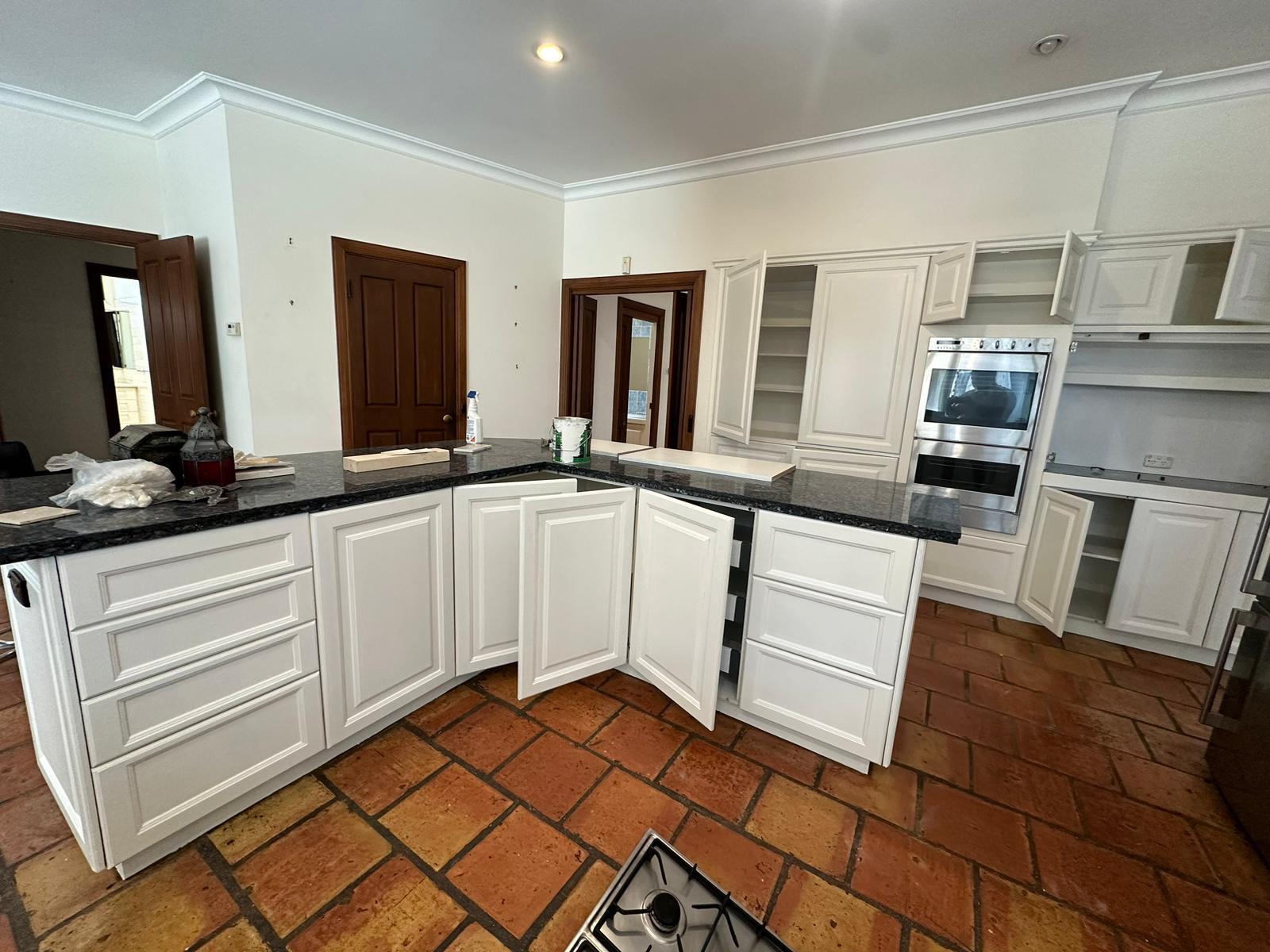
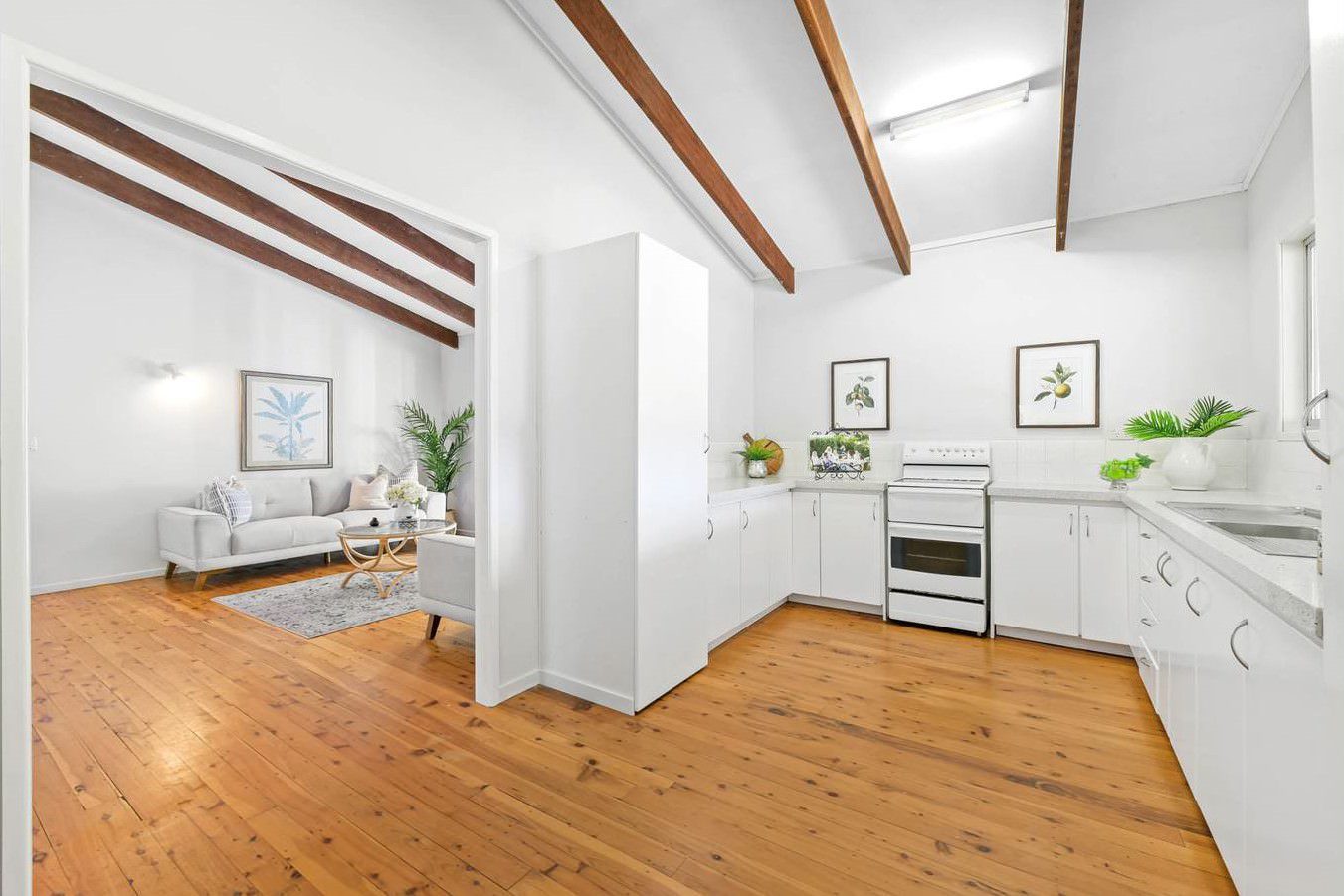
A lot of Melbourne homeowners end up in the same spot. The kitchen layout still works, the cabinets are structurally serviceable, but the finish looks tired, yellowed, chipped at the edges, or stuck in a different decade. That's when the main question isn't just what colour to paint them. It's whether painting is the right move at all.
In period homes around Kew, Hawthorn or Camberwell, that question often comes up with solid timber joinery that has age but also value. In newer apartments around South Yarra or Richmond, it's more often laminate or melamine fronts that look flat and dated but can still be refinished if the surface is compatible and the prep is done properly. The wrong decision wastes money. The right one gives you a cleaner, current kitchen without pulling the room apart.
At Newline Painting, this is how we approach kitchen cabinet painting in Melbourne. Not as a cosmetic shortcut, and not as a blanket answer for every kitchen. A proper cabinet repaint is a technical refinishing job. It depends on substrate, moisture exposure, existing coatings, how the doors are prepared, how the topcoats are applied, and whether the finish is allowed to cure properly before the kitchen goes back into heavy use.
Table of Contents
- Your Guide to Kitchen Cabinet Painting in Melbourne
- The Benefits of Professional Cabinet Refinishing
- Realistic Costs and Timelines in Melbourne
- The Professional Cabinet Painting Process Step by Step
- DIY Cabinet Painting vs Hiring a Professional
- How to Choose the Right Painter in Melbourne
- Choosing Your Colours and Sheen for a Lasting Finish
Your Guide to Kitchen Cabinet Painting in Melbourne
Kitchen cabinet painting in Melbourne makes sense when the cabinet boxes, door fronts and layout are still worth keeping. If the kitchen is functional and the problem is mainly finish, colour, minor wear, or an outdated look, repainting can be a practical way to modernise the room without stepping into a full renovation.
That said, not every cabinet should be painted. Older solid timber doors can respond very well to a professional refinishing system. Laminate and melamine can also be painted, but only if the prep is disciplined and the existing boards are still stable. Cabinets with swelling, failed edges, water damage around the sink run, or blown substrate often need a more honest conversation.
Practical rule: If the door is sound but ugly, painting is usually worth assessing. If the board itself is breaking down, paint won't fix the substrate.
Melbourne homes vary more than people think. A Victorian terrace in Albert Park, a Federation home in Malvern, and a modern apartment in South Yarra can all need completely different cabinet prep, even if the brief sounds similar on the phone. That's why cabinet work shouldn't be quoted purely from photos if the substrate is unclear.
The decision usually comes down to four things:
- Cabinet material. Solid timber, MDF, laminate and melamine all behave differently under abrasion, primer and topcoat.
- Current condition. Chips, edge swelling, old DIY coatings and greasy contamination change the scope fast.
- Finish expectation. A brushed site-applied update is one thing. A sprayed, furniture-like finish is another.
- How long you want it to last. Short-term cosmetic improvement and durable refinishing are not the same job.
Newline Painting is a Melbourne-based painting company founded by Phi Dang. We work across Melbourne metro and surrounding Victoria, and the business has completed 500+ projects, backed by a 7-year workmanship warranty and $20M public liability insurance. Those proof points matter with cabinet work because this isn't forgiving painting. The prep standard determines whether the finish still looks right after real kitchen use.
The Benefits of Professional Cabinet Refinishing
Professional cabinet refinishing is valuable when you want to change the look of the kitchen while keeping the existing joinery in place. The biggest gain is usually not just appearance. It's avoiding the disruption that comes with removing serviceable cabinetry.

It keeps a working kitchen intact
If the cabinet boxes are still square, hinges still function, and the layout suits the household, repainting lets you upgrade the visible surfaces without treating the kitchen like a demolition project. For owner-occupiers, that usually means less interruption. For property managers and selling agents, it means a faster visual reset on a tired kitchen.
This is especially useful in apartments where access, lift bookings, waste handling and neighbour impact all add complexity to larger renovation work. Painting doesn't solve structural problems, but it can solve a kitchen that feels dated, dark or worn.
It can be the more sensible finish decision
A lot of kitchens don't need new cabinets. They need an accurate decision. On vintage timber doors, painting can completely change the character of the room if the joinery detail is still worth keeping. On laminate or melamine, it can be a sound option when the boards are stable and the coating system is chosen for adhesion rather than convenience.
A good cabinet repaint changes the room because cabinets hold so much visual area. A bad one fails first on edges, around handles, and near moisture.
There's also a waste question. If the carcasses and doors are usable, keeping them out of landfill is often the better outcome. That matters in older Melbourne housing stock where kitchens may be tired without being at end of life.
It helps when presentation matters
For homes being prepared for market, cabinets often sit in that awkward middle ground. They're not new enough to photograph well, but not damaged enough to justify replacement. A professional repaint can lift the kitchen's presentation in a way buyers notice immediately.
That's one reason cabinet refinishing comes up regularly in pre-sale work tied to agencies such as Ray White, Jellis Craig and Marshall White. The improvement is visual, but the benefit is strategic. A cleaner, lighter, well-finished kitchen is easier to present, easier to style, and easier for buyers to read as maintained rather than deferred.
Realistic Costs and Timelines in Melbourne
Kitchen cabinet painting in Melbourne is usually a labour-heavy service, not a materials-heavy one. The market data that best fits Australian conditions comes from Airtasker Australia's kitchen cabinet painting pricing, which reports a median price of AU$1,000 and a typical range of AU$580 to AU$1,500 for cabinet painting tasks over the last 4 years. That's a useful starting point for understanding the market, but homeowners should treat it as task-marketplace guidance, not a guaranteed quote for a full professional refinishing system.

What the market data tells you
The main reason quotes vary is simple. Cabinet painting is prep-intensive. According to Angi's cabinet painting cost breakdown, 70% to 80% of total project cost is labor, with materials making up the remainder. That aligns with how cabinet jobs work in practice. Cleaning, degreasing, removal, sanding, masking, priming, spray setup, de-nibbing and careful reassembly take far more time than people expect.
For Melbourne homeowners, the practical takeaway is this. A cabinet repaint is rarely priced like a quick wall-and-trim refresh. It sits in a different category because the joinery has to be handled more like furniture than broadacre interior surfaces.
What changes the quote
Two kitchens can look similar in photos and price very differently on site. The variables that matter most are usually these:
- Number of components. More doors, more drawer fronts, more ends and more exposed panels mean more handling and more spray time.
- Substrate type. Timber, MDF, laminate and melamine need different prep and different risk allowances.
- Existing condition. Grease build-up, swollen edges, old peeling coatings and damaged corners increase labour.
- Occupied-home constraints. Working cleanly in a lived-in kitchen takes more protection, staging and communication.
- Finish standard. There's a big difference between basic site repainting and a finer sprayed finish with full door removal.
If you want a broader budgeting reference for painting work, Newline Painting also provides an Australia painting cost calculator that helps frame how labour, access and surface condition affect pricing.
How long the work usually takes
Timelines depend on scope, substrate and drying conditions, especially in Melbourne's stop-start weather. A small straightforward kitchen can move quickly. A larger occupied kitchen with full removal, spray prep and staged reinstallation takes longer because the sequence can't be rushed without compromising finish quality.
The timeline that matters isn't just when paint feels dry. It's when doors can be handled, rehung and used without marking the finish.
The cure period is where many expectations go wrong. A cabinet finish may look done before it's ready for normal use. That matters around handles, drawer edges and sink-side cupboards, where fresh coatings cop the first abuse.
The Professional Cabinet Painting Process Step by Step
A cabinet repaint succeeds or fails in the setup, not in the final coat. In a Melbourne kitchen, that matters even more because the housing stock is mixed. I see solid timber doors in period homes, vinyl wrap failures in 1990s renovations, and melamine or laminate fronts in newer apartments. The process changes with each one. So does the answer to a bigger question. Is painting the right move at all?
If the cabinet boxes are sound, the doors are structurally stable, and the layout still works, painting is often the better-value option. If doors are swollen, thermofoil is lifting across multiple panels, hinges are tearing out, or the kitchen has deeper functional problems, refacing or replacement usually makes more sense than coating over decline.

Step one to three
1. Remove, label, and assess each component
Doors, drawers, hinges, handles and removable fittings come off first. Every piece gets labelled for position and swing so reinstallation is accurate and hinge adjustments are kept to a minimum later.
This stage also tells us whether the kitchen is a good candidate for painting. Flat MDF doors in decent condition are usually straightforward. Solid timber can be excellent if joints are stable. Laminate and melamine can be painted well, but only with the right prep and primer system. Vinyl wrap is the one that often pushes the decision the other way. If it is already peeling or shrinking, painting over it is usually poor money after good.
2. Degrease until the surface is clean
Kitchen grime is rarely obvious until sanding starts. Around handles, above the cooktop, and near the sink, cabinets pick up grease, detergent residue, silicone contamination and hand oils. If that stays on the surface, the coating system is already compromised before primer goes on.
Professional cleaning is slower than many homeowners expect. It often takes more than one pass, especially in older family kitchens and rental properties that have had years of product build-up.
3. Sand and repair with the finish in mind
Sanding does two jobs. It creates adhesion and exposes defects that need repair. Chips, swollen MDF edges, failed caulking, old brush marks and unstable filler all show up here.
The sanding method depends on the profile and substrate. Shaker doors, routed panels and flat slab fronts each need a different approach if the goal is a clean painted finish without washed-out edges or scratch telegraphing. On a good job, repairs are blended before primer so the final coating does not highlight every old impact mark.
Here's a visual overview of the workflow in action:
Step four to six
4. Prime for the actual substrate, not for convenience
Primer selection separates trade work from hopeful repainting. Timber, MDF, laminate and melamine do not accept coatings the same way, and one generic undercoat is rarely the right answer across all of them.
A painter should be able to identify the substrate before work starts and explain the system in plain language. If the kitchen contains mixed materials, that usually means more than one prep approach and sometimes more than one primer. That is normal. It is also why two kitchens that look similar in photos can price very differently.
5. Apply topcoats under controlled conditions
For most cabinet fronts, spraying gives the cleanest result. Doors and drawer faces are usually sprayed flat to improve flow-out and reduce visible texture. Fixed end panels and some frame sections may be sprayed on site or finished by another method depending on access, protection requirements and the standard being chased.
A useful technical reference appears in this cabinet finishing video reference. It shows final sanding after primer, inspection, de-nibbing, and then topcoating. That sequence matters because cabinet finishes are judged at eye level and touched every day. Small defects that would disappear on a wall stay visible on a satin cabinet door, especially in lighter colours and apartment kitchens with strong side light.
Spray work also has trade-offs. It needs better masking, better dust control and more staging space. In some compact Melbourne apartments, that affects how the job is planned and whether some components are better finished off site.
6. Allow cure time, then reinstall and inspect
Dry to touch is not ready for service. Cabinet coatings need enough cure before hardware goes back on, before doors are rehung, and before drawers start rubbing against freshly coated edges.
Final reinstallation includes alignment, hinge adjustment, handle refit and a close inspection of the high-wear areas. That means checking around pulls, inside edges, under sink cabinets, kicker zones and the corners of drawer fronts. These are the spots that show rushed work first.
The difference is usually easy to see:
| Stage | Professional standard | Common failure point |
|---|---|---|
| Removal and labelling | Doors and hardware removed, tracked and reinstalled correctly | Parts painted in place, poor alignment on refit |
| Cleaning and prep | Full degrease, sanding, repairs and edge treatment | Residue left behind, swelling and chips painted over |
| Priming | Substrate-specific system matched to the cabinet material | Wrong primer, poor adhesion on laminate or melamine |
| Topcoating | Controlled application with consistent film build and sheen | Brush marks, roller texture, patchy coverage |
| Reassembly and cure | Rehung after adequate cure with final adjustments | Early handling, edge damage, hinge rub and marking |
For homeowners deciding between painting, refacing or replacing, this process is the practical test. If the cabinetry is sound enough to justify this level of prep and coating, painting can deliver a strong result. If the substrate is failing, the doors are low-grade wrapped board, or the kitchen has broader layout and storage problems, a professional painter should tell you that before taking the job.
DIY Cabinet Painting vs Hiring a Professional
A Melbourne homeowner with a 1990s laminate kitchen in a rental property is making a different decision from someone with solid timber joinery in a period home in Kew, or a compact apartment kitchen with two-pack style doors in Southbank. Painting is not automatically the right answer for all three. The first question is whether the cabinets are worth coating at all, or whether the money is better spent on refacing or replacement.

DIY can make sense when the cabinet boxes are sound, the doors are flat and stable, and the goal is a clean cosmetic reset rather than a factory-grade finish. Utility rooms, investor updates, and older kitchens with straightforward profiles are the usual candidates. If you have patience for proper prep, enough space to stage doors, and realistic expectations about finish quality, a careful DIY job can be serviceable.
The risk sits in the substrate and the condition, not just the painting skill.
Laminate, melamine, thermofoil, swollen MDF edges, and older water-damaged sink units all behave differently. Some can be painted successfully. Some can be painted, but only as a shorter-term improvement. Some should not be painted because the board is already failing, the wrap is lifting, or the doors are too damaged to justify the labour. In those cases, refacing or replacing fronts is the better long-term spend.
Where DIY usually falls short
The common DIY failures are predictable because cabinets fail in predictable places. Around handles. On outside edges. Next to the dishwasher. Under the sink. Along drawer bottoms where rings, fingernails and cleaning cloths keep hitting the coating.
The usual causes are straightforward:
- Contamination left in the surface from cooking oils, silicone-based cleaners, or hand grease
- Insufficient abrasion on slick manufactured boards
- The wrong primer for laminate, melamine or previously coated doors
- Too much paint on edges and profiles, which leaves a softer film and visible build-up
- Reinstalling too early, before the coating has hardened enough for regular kitchen use
A DIY result can look acceptable on day one and still fail within months if the coating system is wrong or the cure time is rushed. That is the part many homeowners do not see coming.
What you actually get from a professional job
Hiring a professional is not just paying someone else to hold the spray gun. You are paying for judgement before the first coat goes on. A good cabinet painter should tell you if your kitchen is a poor candidate for painting, and should be specific about why.
At Newline Painting, we treat cabinet work as a condition and value decision first. If the layout is dated but functional, the joinery is structurally sound, and the doors are worth saving, painting can be a smart upgrade. If the cabinets are low-grade wrapped board, the moisture damage is advanced, or the kitchen needs new storage and hardware configuration anyway, painting often becomes false economy.
Professional work also changes the finish quality. Spray application, controlled prep, proper masking, labelled reassembly, and enough curing time produce a flatter, cleaner result than the average weekend setup. For homeowners comparing quotes from professional painters near you in Melbourne, this is the difference to look for. The finish should suit the value of the home and the expected lifespan of the kitchen, not just the budget for this month.
A practical way to decide
Choose DIY if all of these are true: the cabinets are sound, the material is suitable for coating, the finish standard can be modest, and you are prepared for the time involved.
Choose a professional if any of these apply:
- You want a sprayed finish with tight sheen consistency
- The doors are laminate or melamine and adhesion risk is high
- There is visible moisture damage that needs assessment before coating
- The kitchen is a key selling feature of the home
- You would rather pay once than repaint failed doors later
For some Melbourne homes, especially well-kept period properties or newer apartments where the kitchen sits in open view of the living area, that finish standard matters. In a budget rental update, it may not.
That is the trade-off. DIY can save money upfront. Professional cabinet painting lowers the risk of choosing the wrong system, coating the wrong substrate, or spending heavily on a kitchen that should have been refaced or replaced instead.
How to Choose the Right Painter in Melbourne
The right painter for cabinet work is the one who's willing to tell you when painting isn't the best option. That sounds obvious, but it's one of the clearest indicators that you're dealing with someone who understands joinery condition, not just sales.
A key question to ask is whether your particular cabinets should be painted at all. General guidance from Lowe's makes the same point in its advice on deciding whether to paint kitchen cabinets. Vintage timber, laminate and moisture-damaged cabinets don't carry the same risk profile. A competent painter should be able to explain when painting is appropriate, when it's a short-term cosmetic fix, and when refacing or replacement is the better long-term decision.
Questions worth asking before you approve a quote
Use the quote stage to test whether the contractor understands cabinet refinishing.
- What substrate are my doors made from. If they can't identify timber, MDF, laminate or melamine, they're guessing.
- Will you remove the doors and hardware. Painting around hinges and handles is a red flag.
- What prep is included. You want clear wording around degreasing, sanding, masking, priming and reassembly.
- How will the finish be applied. If a sprayed result matters to you, ask directly.
- What happens if some doors are moisture-damaged. The answer should be conditional, not automatic.
Signs the painter understands cabinet work
Good cabinet quotes are specific. They describe scope, preparation and paint system clearly. They don't hide behind vague phrases like “prep as required” when the entire job depends on prep quality.
A few practical checks matter in Melbourne:
| What to check | Why it matters |
|---|---|
| Written scope | Prevents disputes about removal, masking and number of components included |
| Insurance | Cabinet jobs happen in occupied homes with benchtops, appliances and flooring nearby |
| Warranty | Shows the business is prepared to stand behind its process |
| Local presence | Accountability is easier when the company is actually based in Melbourne |
| Cabinet-specific experience | Interior wall painting and cabinet refinishing are different skill sets |
If you're comparing local contractors, it's reasonable to look at painters near you in Melbourne and then narrow the list by who can answer cabinet-specific questions properly.
Newline Painting operates from South Yarra, uses recognised trade brands including Dulux, Haymes, Taubmans, Berger and Wattyl, and backs workmanship with a 7-year warranty and $20M public liability insurance. Those details don't replace due diligence, but they are the sort of signals homeowners should be checking.
Choosing Your Colours and Sheen for a Lasting Finish
For most kitchens, the best colour and sheen choices are the ones that still look clean after regular use, not just on day one. That usually means choosing a finish that balances washability, touch-up practicality and how much surface texture you want the light to reveal.
What tends to hold up best in kitchens
High gloss shows everything. Fingerprints, small ripples, edge defects and minor substrate imperfections all become more obvious. For many Melbourne kitchens, a lower sheen or satin-style cabinet finish is the more practical choice because it still cleans well but doesn't punish the surface quite as hard visually.
Colour should suit the room, the benchtop, the splashback and the amount of natural light. Warm whites, softer greys, muted greens, deeper blues and off-whites can all work. In older homes, the best cabinet colour often isn't the brightest white. It's the one that sits comfortably with existing trims, flooring and the age of the house.
If you're comparing finish levels, Newline Painting has a useful page on how different paint finishes behave and where each sheen tends to work best.
A final practical point. Colour can modernise a kitchen, but sheen determines how the finish lives. In cabinet work, that decision affects maintenance almost as much as the paint system itself.
If you're weighing up kitchen cabinet painting in Melbourne and want an honest answer on whether your cabinets should be painted, refaced or left alone, request a free on-site quote from Newline Painting or call 1300 044 206. We'll assess the substrate, explain the prep required, and give you a clear written scope for your specific kitchen.